1
Drink directly
Push-button fountain controls open a valve and send a controlled arc of water from the bubbler for immediate drinking.
Free hydration across campus
College of the Desert water fountains and bottle filling stations give students direct access to drinking water between classes. In a desert environment, this service supports comfort, concentration, wellness, and a safer day on campus without requiring students to purchase bottled drinks.
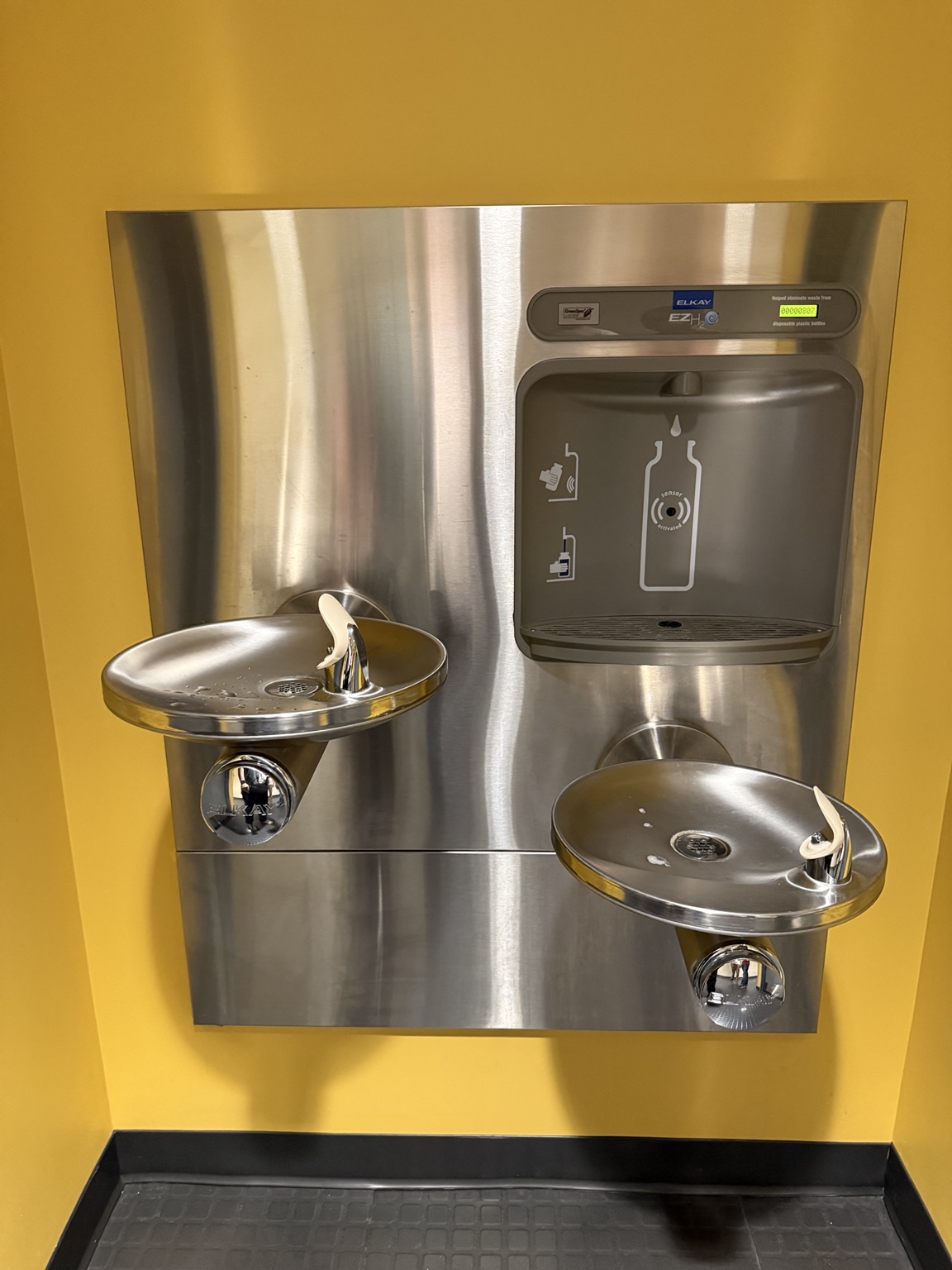
One station two ways to hydrate
The station combines traditional drinking fountains with a dedicated bottle-filling area. Students can take a quick drink directly from a fountain or place a reusable container under the upper dispenser for a faster refill with less splashing.
Push-button fountain controls open a valve and send a controlled arc of water from the bubbler for immediate drinking.
The upper bay detects a bottle with an electronic sensor, opens the water valve automatically, and directs a smooth stream into the container.
A filled reusable bottle lets a student carry water through the day and return for another refill without paying for another drink.
Technical overview
The system is connected to the building's potable-water plumbing. Normal supply pressure moves water through the unit. Electricity does not push the water through the pipes; it supports the sensor, controls, indicator display, filter monitor, and refrigeration equipment when a station provides chilled water.
Electrical operation
Commercial ezH2O-style stations commonly use a standard 115-volt, 60-hertz electrical connection. The electrical system allows the plumbing fixture to provide automatic and monitored functions.
Water quality
Filtered Elkay models use replaceable cartridges tested and certified to NSF/ANSI standards for specific contaminant reductions. Depending on the filter and model, those claims can include lead, particulates, cysts, chlorine taste, and odor. A typical certified filter may be rated for approximately 3,000 gallons before replacement.
Technical note: A filter reduces the contaminants covered by its certification; it does not sterilize water or replace required public-water testing and facility maintenance. Exact equipment can vary by campus location.
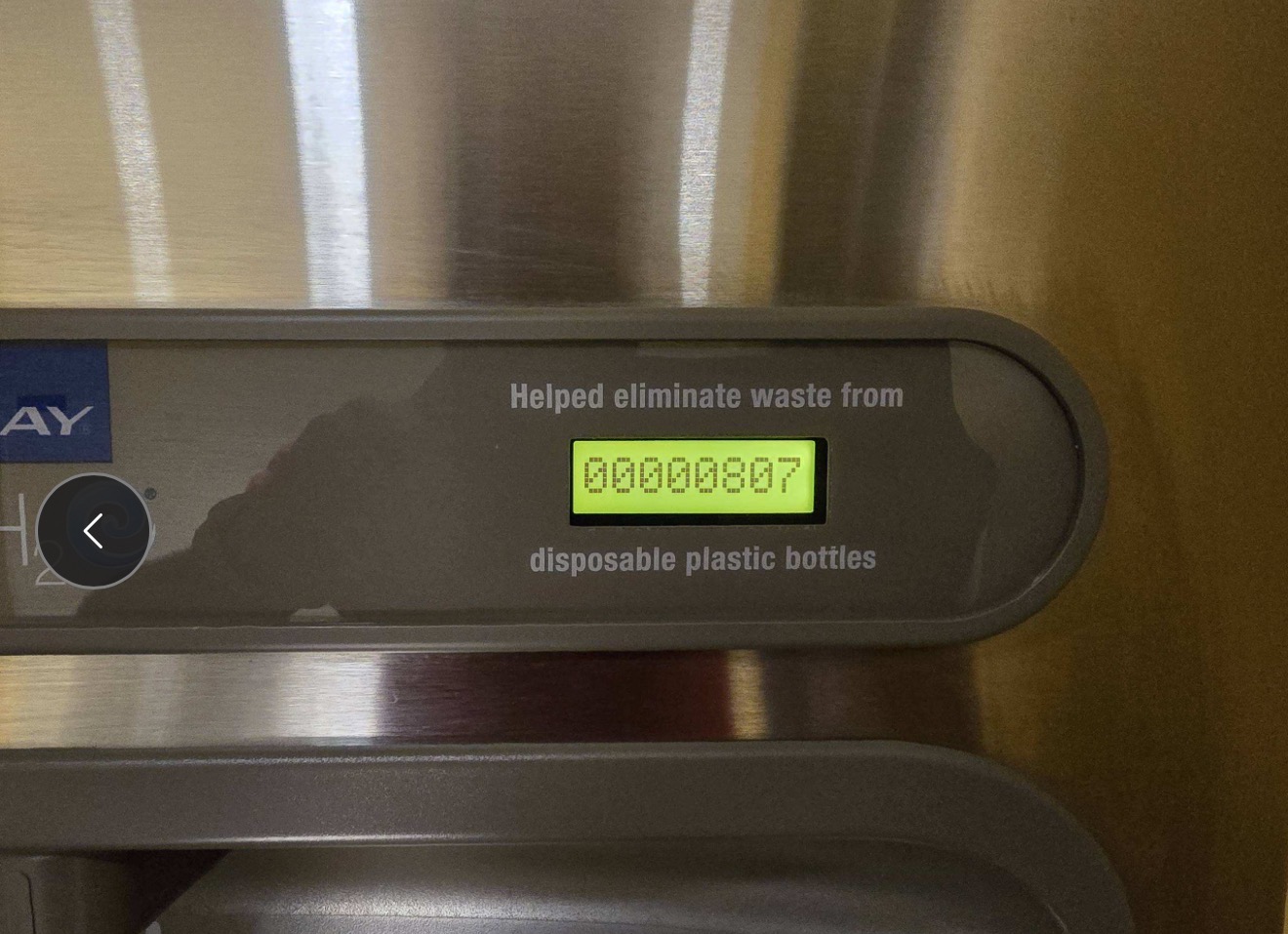
Sustainability counter
20-ounce plastic bottles estimated to be avoided
The manufacturer describes the Green Ticker as a bottle-savings counter. At 20 ounces per bottle, 887 bottles equal about 17,740 fluid ounces, or approximately 139 gallons. This conversion estimates the water represented by the counter; the display itself is not a precision gallon meter.
Essential campus infrastructure
Drinking water is a basic need, not a luxury. Students walking between buildings in Palm Desert can face high temperatures and dry conditions. Convenient stations make it easier to drink and refill throughout the day, supporting hydration without interrupting class schedules.
The CDC advises people to carry a water bottle and refill it throughout the day during hot weather. Reliable access to free water supports that habit directly on campus.
Saves student money: Students can bring a reusable bottle instead of repeatedly buying water or other drinks from vending machines.
Reduces disposable waste: Every refill can replace another single-use plastic bottle.
Improves access: Stations positioned around campus give students more opportunities to get water near classrooms and common areas.
Supports longer campus days: Students attending several classes can refill as needed instead of rationing one purchased drink.
References
This student service spotlight uses field photographs together with official manufacturer and public-health information. Exact specifications and maintenance schedules should be confirmed by College of the Desert Facilities Services.